Woolly Rhinoceros
Discover the majestic Woolly Rhinoceros, an iconic symbol of the Ice Age.
What did the Woolly Rhinoceros look like?
What was the habitat of the Woolly Rhinoceros?
How did the Woolly Rhinoceros adapt to its environment?
Below you’ll find clear answers to all of these—plus fossil insights, anatomy details, and information about its role in ancient ecosystems.
Coelodonta antiquitatis
The Woolly Rhinoceros roamed the icy tundras of the Pleistocene, showcasing remarkable adaptations to survive in harsh climates.
Quick Facts
- Type: Extinct animal
- Diet: Herbivore
- Habitat: Cold tundras and grasslands of Europe and Asia
- Lifespan: Estimated 30-40 years
- Conservation status: Extinct
Overview
The Woolly Rhinoceros, known scientifically as Coelodonta antiquitatis, is one of the most fascinating creatures to have roamed the Earth during the Pleistocene epoch. With its thick fur and impressive horns, this herbivorous giant has captured the imagination of paleontologists and enthusiasts alike. Understanding the Woolly Rhinoceros not only sheds light on prehistoric ecosystems but also highlights the impact of climate change on species survival.
Woolly Rhinoceroses were well-adapted to the frigid climates of the Ice Age, thriving in the cold tundras and grasslands of Europe and Asia. Their robust bodies, covered in a thick layer of fur, allowed them to withstand extreme temperatures. Fossils and preserved remains have provided invaluable insights into their behavior, diet, and interactions with other species. As we explore the life of the Woolly Rhinoceros, we also reflect on the broader implications of extinction and the lessons it offers for contemporary conservation efforts.
Physical Characteristics
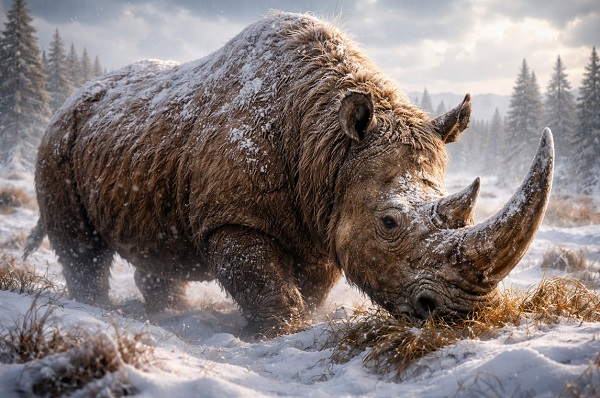
The Woolly Rhinoceros was a remarkable creature, easily identifiable by its unique features.
- Covered in long, shaggy fur to insulate against cold temperatures.
- Had two large horns made of keratin, with the front horn being longer than the back.
- Sturdy build with a large head and a barrel-shaped body, weighing up to 2,500 kg.
Habitat and Distribution
These majestic animals inhabited a variety of environments during the Ice Age.
- Primarily found in the cold tundras and steppe regions of Europe and Asia.
- Fossil evidence indicates they roamed from the British Isles to Siberia.
- Preferred open grasslands where they could graze on vegetation.
Diet and Feeding Habits
Woolly Rhinoceroses were herbivores, primarily feeding on grasses and shrubs.
- Their diet consisted mainly of tough, fibrous plants, including grasses, leaves, and shrubs.
- Adapted to foraging in snow-covered landscapes, using their horns to dig through the snow.
- Fossilized dung has provided insights into their dietary preferences.
Adaptations to the Ice Age
The Woolly Rhinoceros had several adaptations that enabled it to thrive in harsh climates.
- Thick fur and a layer of fat provided insulation against the cold.
- Large, curved horns were used for defense and foraging.
- Strong limbs allowed them to traverse snowy terrains effectively.
Extinction and Its Causes
The extinction of the Woolly Rhinoceros is a subject of ongoing research and debate.
- Believed to have gone extinct around 10,000 years ago, coinciding with the end of the last Ice Age.
- Climate change and habitat loss are considered major factors in their decline.
- Human hunting may have also contributed to their extinction.
The Significance of Woolly Rhinoceros in Paleontology
The study of Woolly Rhinoceros fossils has greatly contributed to our understanding of prehistoric life.
- Fossils have been discovered in various locations, providing insights into their distribution and behavior.
- The study of their remains helps scientists understand the ecosystems of the Ice Age.
- Woolly Rhinoceros remains have been found preserved in permafrost, offering remarkable details about their anatomy.
FAQ
What did the Woolly Rhinoceros look like?
The Woolly Rhinoceros had a large, robust body covered in thick, shaggy fur, with two prominent horns on its snout.
What was the habitat of the Woolly Rhinoceros?
They inhabited cold tundras and grasslands across Europe and Asia during the Pleistocene epoch.
How did the Woolly Rhinoceros adapt to its environment?
They developed thick fur and a layer of fat for insulation, along with strong limbs for navigating snowy terrains.
What did the Woolly Rhinoceros eat?
Their diet mainly consisted of tough grasses, shrubs, and other fibrous plants.
Why did the Woolly Rhinoceros go extinct?
The combination of climate change, habitat loss, and possibly human hunting led to their extinction.
Related Articles
References (General)
- Britannica — general species background
- National Geographic — wildlife overview articles
- IUCN Red List — conservation status reference