Woolly Monkey
The Woolly Monkey is a fascinating primate known for its unique appearance and social behavior. These intelligent creatures are not only captivating to observe but also play a crucial role in their ecosystems. Discover more about their characteristics, habitat, and conservation status.
- What do Woolly Monkeys eat?
- Where do Woolly Monkeys live?
- Are Woolly Monkeys endangered?
Below you’ll find clear answers to all of these—plus practical care, health, and lifestyle notes.
Lagothrix spp.
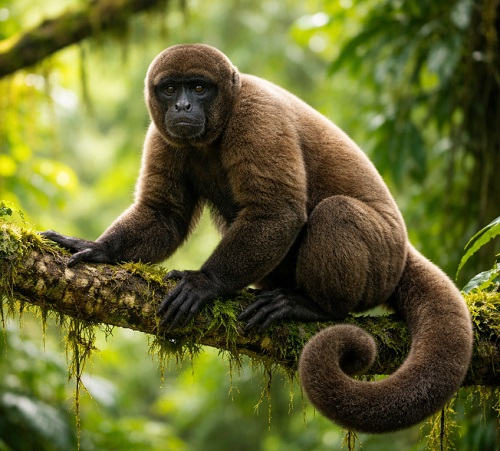
Woolly Monkeys are social primates known for their thick fur and playful nature.
Quick Facts
- Type: Mammal
- Diet: Fruits, leaves, seeds, and flowers
- Habitat: Tropical rainforests of South America
- Lifespan: 20 to 30 years in the wild
- Conservation status: Vulnerable
Overview
Woolly Monkeys, belonging to the genus Lagothrix, are medium to large-sized primates native to the tropical rainforests of South America. With their distinctive woolly fur and expressive faces, these monkeys are not only visually striking but also exhibit complex social behaviors. They are known for their intelligence and adaptability, making them a subject of interest for researchers and animal lovers alike. This profile delves into the various aspects of Woolly Monkeys, including their diet, habitat, social structure, and conservation status.
Physical Characteristics
Woolly Monkeys are easily recognizable due to their unique physical features.
- Thick, woolly fur that varies in color from brown to gray, often with lighter underparts.
- Long, prehensile tails that aid in climbing and swinging through trees.
- Strong limbs and hands with opposable thumbs, allowing for a firm grip on branches.
Diet and Feeding Habits
Woolly Monkeys are primarily frugivorous, but their diet is quite diverse.
- Mainly consume fruits, which make up a large portion of their diet.
- Also eat leaves, seeds, and flowers, showcasing their adaptability to different food sources.
- Occasionally consume insects and small animals, particularly during times of food scarcity.
Habitat and Distribution
These monkeys thrive in specific environments that support their lifestyle.
- Found in the tropical rainforests of the Amazon Basin, including countries like Colombia, Ecuador, Peru, and Brazil.
- Prefer areas with dense canopy cover, which provides safety from predators and access to food.
- Their habitat is increasingly threatened by deforestation and human encroachment.
Social Structure and Behavior
Woolly Monkeys are highly social animals with complex interactions.
- Live in groups called troops, which can consist of 10 to 30 individuals.
- Exhibit strong social bonds, often grooming each other to reinforce relationships.
- Communication involves a range of vocalizations, body language, and facial expressions.
Reproduction and Lifespan
Woolly Monkeys have a unique reproductive cycle and a relatively long lifespan.
- Breeding typically occurs during the rainy season, with a gestation period of about 5 to 6 months.
- Usually give birth to a single offspring, which is cared for by both parents and other group members.
- In the wild, they can live up to 20 to 30 years, while those in captivity may live longer.
Conservation Status
Woolly Monkeys face significant threats that impact their populations.
- Listed as Vulnerable by the IUCN due to habitat loss and hunting.
- Deforestation for agriculture and logging is a major threat to their survival.
- Conservation efforts are underway, including habitat protection and awareness campaigns.
Interesting Facts
Woolly Monkeys have some unique traits that make them stand out.
- Their prehensile tails can grasp branches, functioning almost like a fifth limb.
- They are known for their playful nature, often engaging in acrobatic displays.
- Woolly Monkeys have a strong sense of community, often seen playing and grooming together.
How to Help Woolly Monkeys
There are several ways individuals can contribute to the conservation of Woolly Monkeys.
- Support organizations that focus on rainforest conservation and wildlife protection.
- Educate others about the importance of preserving natural habitats.
- Reduce your carbon footprint to help combat climate change, which affects their environment.
FAQ
What do Woolly Monkeys eat?
Woolly Monkeys primarily eat fruits, but their diet also includes leaves, seeds, flowers, and occasionally insects.
Where do Woolly Monkeys live?
They inhabit the tropical rainforests of South America, particularly in the Amazon Basin.
Are Woolly Monkeys endangered?
Yes, they are classified as Vulnerable due to habitat loss and hunting.
How long do Woolly Monkeys live?
In the wild, they can live up to 20 to 30 years, while those in captivity may live longer.
What is unique about Woolly Monkeys?
They have prehensile tails that act like a fifth limb, allowing them to navigate their arboreal habitat with ease.
References (General)
- Britannica — general species background
- National Geographic — wildlife overview articles
- IUCN Red List — conservation status reference