

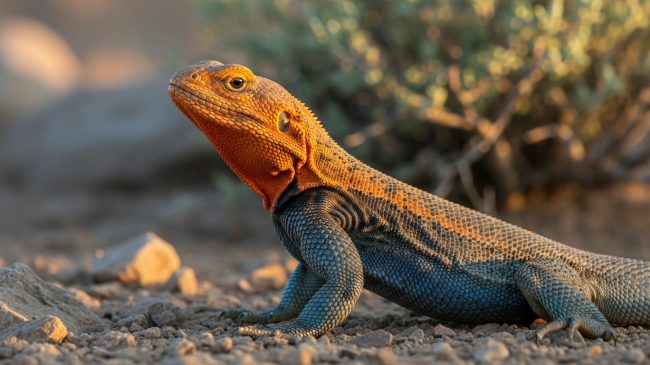
Agama Lizard
Discover the vibrant world of Agama lizards, known for their striking colors and fascinating behaviors!
What are the distinctive features of Agama lizards?
How do Agama lizards adapt to their environments?
What is the best way to care for an Agama lizard as a pet?
Below you’ll find clear answers to all of these—plus practical facts, behavior insights, and habitat details.
Agama
Agama lizards are colorful reptiles that thrive in diverse habitats across Africa.
Quick Facts
- Type: Animal species
- Diet: Insectivorous, feeding on insects and plant matter
- Habitat: Open savannas, rocky areas, and forests in Africa
- Lifespan: 5 to 10 years in captivity
- Conservation status: Least Concern
Overview
Agama lizards are a captivating group of reptiles found primarily in Africa. Known for their vibrant colors and unique behaviors, these lizards are not only fascinating to observe in the wild but also popular as pets. In this article, we will explore the various species of Agama lizards, their habitats, behaviors, and care requirements for those interested in keeping them as pets.
The Agama lizard, belonging to the family Agamidae, comprises several species, each exhibiting a range of colors and patterns. These lizards are primarily found in Africa, where they inhabit diverse environments, from arid deserts to lush forests. Agama lizards are known for their social behavior, often seen basking in the sun or engaging in territorial displays. Their adaptability to various habitats and diets makes them a resilient species, although some populations face threats from habitat loss and climate change.
Physical Characteristics
Agama lizards are known for their striking appearance, which varies significantly among species.
- Coloration ranges from bright blues and greens to earthy browns and grays.
- Males often exhibit more vibrant colors than females, especially during mating season.
- They have a distinctively flattened body and a long tail, aiding in balance and agility.
Habitat and Distribution
Agama lizards are widely distributed across Africa, thriving in various environments.
- Commonly found in savannas, grasslands, and rocky terrains.
- Some species prefer wooded areas or scrublands, showcasing their adaptability.
- They are often seen basking on rocks or branches, utilizing their environment for warmth and visibility.
Behavior and Social Structure
These lizards display fascinating social behaviors, particularly among males.
- Males are territorial and often engage in displays to assert dominance.
- They communicate through body language, including head bobbing and color changes.
- Agama lizards are diurnal, being most active during the day, which aids in their hunting and basking activities.
Diet and Feeding Habits
Agama lizards are primarily insectivorous, but their diet can vary based on availability.
- They consume a variety of insects, including crickets, beetles, and grasshoppers.
- Some species also eat plant matter, including leaves and flowers, showcasing their omnivorous tendencies.
- In captivity, a balanced diet is essential for their health, often supplemented with vitamins and minerals.
Caring for Agama Lizards as Pets
Agama lizards can make excellent pets with the right care and environment.
- Provide a spacious terrarium with adequate heating and UVB lighting.
- Maintain a substrate that allows for burrowing and climbing, such as sand or gravel.
- Regularly monitor their diet and health, ensuring they receive a balanced intake of nutrients.
Conservation Status
While many Agama lizard species are abundant, some face threats from habitat destruction.
- The IUCN lists most Agama species as Least Concern, but local populations may be threatened.
- Habitat loss due to agriculture and urbanization poses significant risks.
- Conservation efforts are essential to maintain their habitats and populations.
FAQ
What is the lifespan of an Agama lizard?
In captivity, Agama lizards typically live between 5 to 10 years with proper care.
Are Agama lizards social animals?
Yes, Agama lizards exhibit social behaviors, particularly among males, who establish territories.
Can Agama lizards be kept in groups?
While they can be social, it's best to keep males separate to prevent territorial disputes.
What do Agama lizards eat?
They primarily feed on insects and may also consume some plant matter.
How can I create a suitable habitat for my Agama lizard?
Provide a spacious terrarium with proper heating, UVB lighting, and climbing structures.
Related Articles
References (General)
- Britannica — general species background
- National Geographic — wildlife overview articles
- IUCN Red List — conservation status reference
