

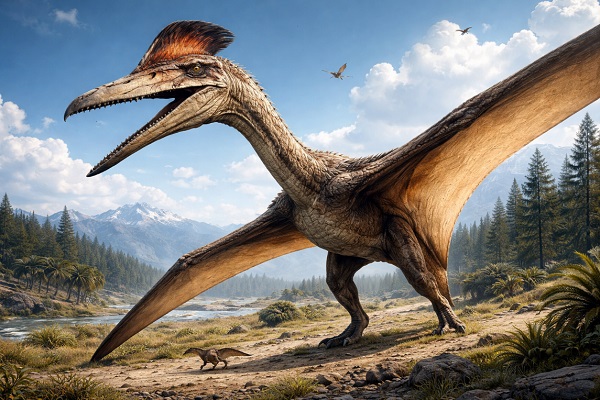
Thanatosdrakon
Thanatosdrakon is a prehistoric flying reptile known for its massive size, powerful wings, and role as one of the largest pterosaurs ever discovered. This ancient creature lived during the age of dinosaurs and dominated the skies with its impressive wingspan and efficient flight abilities. Its name, meaning “dragon of death,” reflects both its size and its position as a top aerial predator in its ecosystem.
Where did Thanatosdrakon live?
What did Thanatosdrakon eat?
Why is Thanatosdrakon important to science?
Below you’ll find clear answers to these questions, along with useful information about Thanatosdrakon’s size, physical features, behavior, and ecological significance.
Thanatosdrakon amaru
Thanatosdrakon amaru is a species of azhdarchid pterosaur that lived during the Late Cretaceous period, approximately 86 million years ago. It was discovered in what is now Argentina, making it one of the largest flying animals ever found in South America. Azhdarchids are known for their long necks, large wings, and terrestrial hunting behavior, similar in some ways to modern storks.
Quick Facts
-
Type: Pterosaur (flying reptile)
-
Diet: Carnivore
-
Time period: Late Cretaceous (around 86 million years ago)
-
Habitat: Plains, river valleys, and coastal regions
-
Wingspan: Estimated up to 30–35 feet (9–11 meters)
-
Height (on ground): Around 10–12 feet (3–3.5 meters)
-
Weight: Estimated 200–250 kg
-
Conservation status: Extinct
Overview
Thanatosdrakon lived during a time when dinosaurs ruled the land, but the skies were dominated by pterosaurs. Unlike birds, pterosaurs were reptiles with membranous wings supported by an elongated finger. Thanatosdrakon belonged to the azhdarchid group, which includes some of the largest flying animals ever known.
This species is particularly important because it represents one of the most complete large pterosaur fossils found in South America. Its discovery has provided scientists with valuable insights into the anatomy, flight capabilities, and ecological roles of giant pterosaurs.
Physical Characteristics
Thanatosdrakon was an enormous flying reptile with a body adapted for both flight and ground movement. Despite its size, it was likely a skilled flyer capable of soaring long distances using air currents.
-
Extremely long wings supported by a single elongated finger
-
Large, lightweight body with hollow bones for flight efficiency
-
Long neck allowing it to reach prey on the ground
-
Toothless, elongated beak adapted for grabbing prey
-
Strong limbs enabling it to walk and hunt on land
Its wings were made of a thin membrane of skin and muscle stretching between its body and elongated fourth finger. This structure allowed for powerful yet energy-efficient flight.
Diet and Feeding Behavior
Thanatosdrakon was a carnivore and likely hunted a variety of small animals. Unlike earlier pterosaurs that fed primarily on fish, azhdarchids are believed to have been more terrestrial hunters.
-
Small vertebrates such as lizards and mammals
-
Juvenile dinosaurs
-
Carrion (dead animals)
-
Possibly fish or amphibians near water sources
Scientists believe Thanatosdrakon used a hunting strategy similar to modern ground-foraging birds. It would walk across open landscapes, scanning for prey, then quickly strike with its long beak.
Behavior and Movement
Thanatosdrakon was likely both an efficient flier and a capable walker. Its anatomy suggests it spent a significant amount of time on land rather than constantly flying.
-
Soaring flight using thermal air currents
-
Quadrupedal movement when on the ground
-
Likely solitary or lived in small groups
-
Long-distance travel between feeding areas
Takeoff may have involved launching itself using all four limbs, a behavior known as quadrupedal launch, which helped these large animals become airborne despite their size.
Ecological Importance
Thanatosdrakon played a key role in its ecosystem as a top aerial and terrestrial predator. By feeding on small animals and scavenging, it helped maintain ecological balance.
Its presence likely influenced the behavior and population of smaller species. In addition, as both predator and scavenger, it contributed to nutrient recycling in prehistoric ecosystems.
The discovery of Thanatosdrakon also helps scientists better understand how large flying animals evolved and how they adapted to different environments across ancient Earth.
Interesting Features of Thanatosdrakon
-
One of the largest flying animals: Comparable in size to small aircraft wingspans
-
Name meaning “dragon of death”: Reflects its imposing size and predatory nature
-
Toothless beak: Adapted for grabbing and swallowing prey whole
-
Advanced flight mechanics: Likely used soaring to conserve energy
-
South American giant: One of the largest pterosaurs discovered on that continent
FAQ
How big was Thanatosdrakon?
It had an estimated wingspan of up to 30–35 feet (9–11 meters) and could stand around 10–12 feet tall when on the ground.
What did Thanatosdrakon eat?
It likely fed on small animals such as reptiles, mammals, and possibly juvenile dinosaurs, as well as carrion.
Where was Thanatosdrakon found?
Fossils were discovered in Argentina, indicating it lived in South America during the Late Cretaceous period.
References (General)
-
National Geographic — prehistoric life and pterosaurs
-
Smithsonian Institution — fossil and pterosaur research
-
Journal of Vertebrate Paleontology — azhdarchid studies
-
IUCN (contextual reference for extinct species discussions)
Animals > Extinct Animals > Pterosaurs


