Haddock
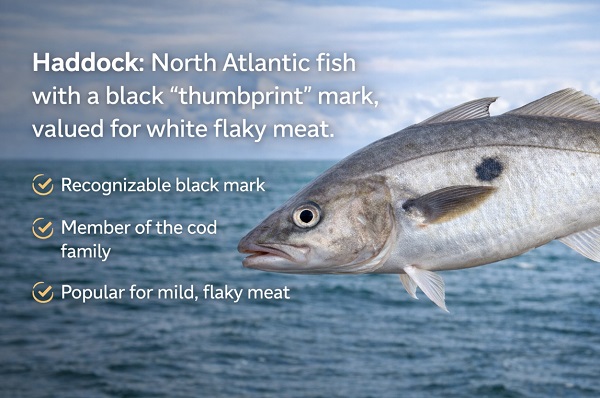
Haddock is a well-known North Atlantic fish recognized by its distinctive black “thumbprint” mark and its mild, flaky white meat. Popular in seafood dishes around the world, haddock has long been an important species for both commercial fisheries and coastal cultures in the North Atlantic.
- Where do haddock live?
- What do haddock eat?
- Why is haddock important in commercial fishing?
Below you’ll find clear answers to these questions—along with details about habitat, behavior, and why haddock remains one of the most valued fish in North Atlantic seafood markets.
Melanogrammus aeglefinus
Haddock is a species of cod-related fish belonging to the family Gadidae. It is widely distributed in the cold waters of the North Atlantic Ocean and has been harvested by humans for centuries. Known for its firm yet tender texture and mild flavor, haddock is a favorite ingredient in traditional dishes such as fish and chips, fish chowder, and smoked seafood products.
Quick Facts
- Type: Marine fish
- Diet: Carnivore
- Habitat: Cold North Atlantic waters
- Average length: 1.5 to 3 feet
- Lifespan: Around 10 years in the wild
- Conservation status: Managed fishery species
Overview
Haddock are bottom-dwelling fish commonly found along the continental shelves of the North Atlantic. Their range extends from the eastern coast of North America to northern Europe, including regions around Iceland, Norway, and the United Kingdom.
One of the most recognizable features of haddock is the dark spot located above the pectoral fin. This marking is often called the “Devil’s thumbprint” or simply the haddock thumbprint. Along with its black lateral line and silvery body, this mark helps distinguish haddock from closely related species such as cod and pollock.
Physical Characteristics
Haddock have streamlined bodies that allow them to move efficiently through ocean waters near the seabed. Their coloration helps them blend into the surrounding marine environment, offering some protection from predators.
- Silvery-gray body with a darker back
- Distinctive black spot above the pectoral fin
- Dark lateral line running along the body
- Three dorsal fins typical of cod family fish
- White belly and soft flaky flesh
Habitat and Distribution
Haddock are primarily found in the cold waters of the North Atlantic Ocean. They prefer habitats along continental shelves where sandy or gravelly seabeds provide suitable feeding grounds.
These fish usually inhabit depths ranging from about 130 to 500 feet, although they can sometimes be found deeper. They are especially abundant in fishing regions such as the Grand Banks near Newfoundland, the North Sea, and waters surrounding Iceland.
Diet and Feeding Behavior
Haddock are opportunistic carnivores that feed on a variety of small marine organisms. Their diet mainly consists of bottom-dwelling animals that live in or near the seabed.
- Crustaceans such as shrimp and crabs
- Small fish
- Marine worms
- Mollusks and shellfish
Young haddock feed primarily on tiny invertebrates, while larger adults expand their diet to include fish and other larger prey. Their feeding behavior helps regulate populations of small marine organisms and contributes to the balance of the ocean ecosystem.
Economic Importance
Haddock has been an essential part of commercial fisheries for centuries. Its firm white flesh makes it one of the most widely consumed fish species in many coastal countries.
- Commonly used in traditional fish and chips
- Popular in smoked seafood products
- Frequently used in chowders and seafood stews
- Important export species for North Atlantic fisheries
Many fisheries are now carefully managed to ensure sustainable harvests. Regulations such as catch limits, seasonal closures, and monitoring programs help maintain healthy haddock populations.
Interesting Features of Haddock
- Distinct thumbprint mark: The black spot above the fin is a unique identifying feature.
- Member of the cod family: Haddock is closely related to Atlantic cod and pollock.
- Highly valued seafood: Its mild taste and flaky texture make it popular worldwide.
- Cold-water specialist: Haddock thrive in the cooler temperatures of northern oceans.
- Important to marine ecosystems: They play a role in controlling populations of small seabed animals.
FAQ
Where are haddock found?
Haddock live in the cold waters of the North Atlantic Ocean, especially around northern Europe, Iceland, and the eastern coast of North America.
What does haddock eat?
Haddock mainly feed on crustaceans, small fish, worms, and mollusks that live near the seabed.
Why is haddock popular as food?
Haddock is valued for its mild flavor, firm white meat, and versatility in cooking, making it a staple in many seafood dishes.
References (General)
- Britannica — marine species overview
- NOAA Fisheries — North Atlantic fishery information
- IUCN Red List — species status references